
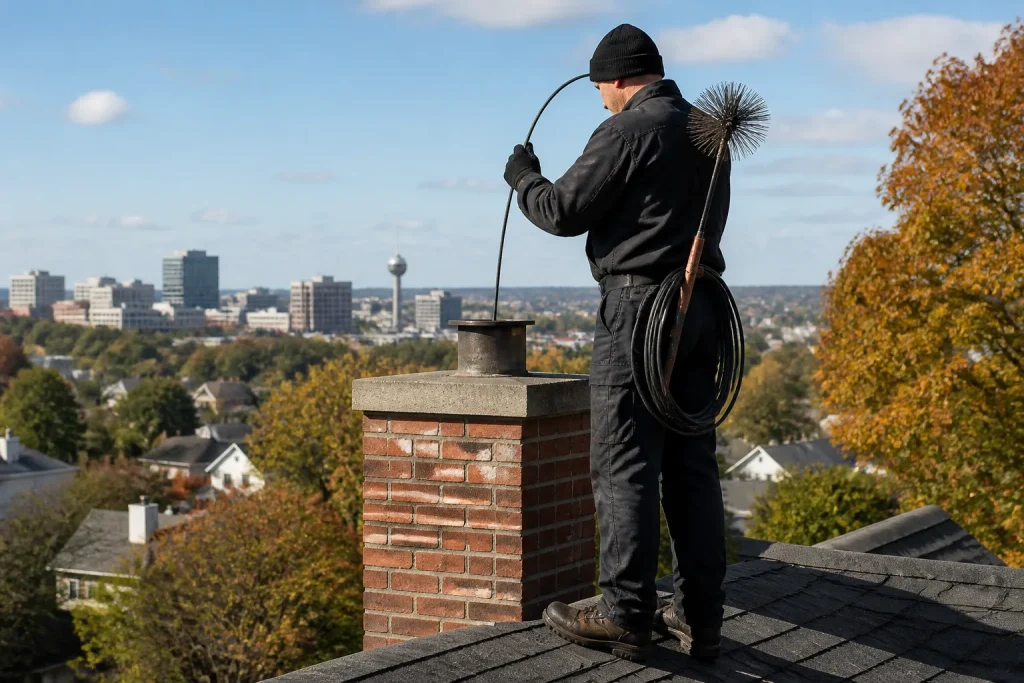
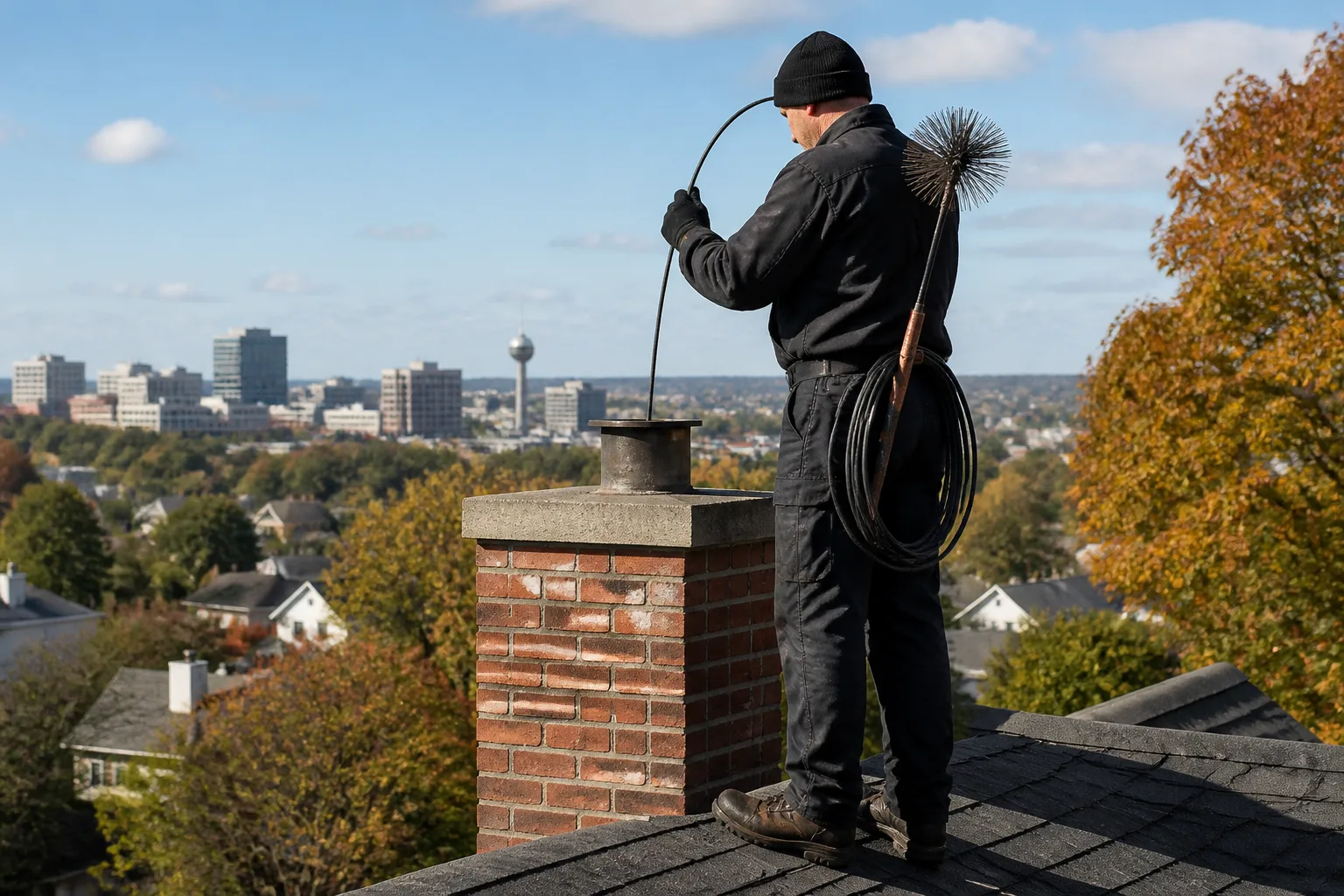
DuraFlex Chimney Sweep in Knoxville: A Homeowner’s Guide
A DuraFlex liner installed at the wrong diameter doesn’t fail dramatically. It just underperforms quietly, robbing your fireplace of draw and building creosote faster than a properly sized liner would. Most homeowners never learn this until a sweep reveals the mess. This guide covers what DuraFlex actually is, how sizing really works, and the questions worth asking before anyone touches your flue.
If you’d rather not sort through alloy grades and diameter charts yourself, call (844) 542-3766. We answer 24/7, with fast dispatch from 7am to 7pm, Sunday through Friday.
What Is a DuraFlex Chimney Liner, Exactly?
A DuraFlex liner is a stainless steel, corrugated flexible liner system that gets pulled down an existing chimney flue to create a new, continuous exhaust path. It’s not a coating or a patch. It’s a full-length metal tube that runs from the top of the chimney to the appliance connection, and it’s one of the professional-grade options we install in Knoxville homes.
The corrugation is the point. A rigid liner needs a straight shot. A flexible liner can navigate the bends, offsets and slight misalignments common in Knoxville’s older housing stock, where flues were often built around the footprint of the house rather than a clean vertical run. If your chimney has an offset, a flex liner is usually the difference between a workable reline and major masonry surgery.
What DuraFlex gets used for:
- Relining a clay tile flue that has cracked, spalled or separated
- Converting an unlined chimney to a code-compliant flue
- Resizing an oversized flue that produces weak draft
- Venting a new wood stove or insert through an existing chimney
A clean sweep is only the beginning. The liner is what carries combustion gases out of your house every time you light a fire, and it deserves the same scrutiny you’d give the firebox.
Why Knoxville’s Older Homes Make Flexibility Matter
Knoxville has a large share of homes built well before modern flue standards, and many of those chimneys were laid up with offsets, corbels and bends that a rigid liner simply can’t pass. In our experience, that’s where the flexibility question stops being theoretical. We’ve seen flues that looked straight from the roof and turned out to jog eighteen inches once the camera went down.
What typically shows up in Knoxville chimneys:
- Clay tile flues with cracked or missing mortar joints between tiles
- Original unlined chimneys with exposed brick interiors
- Offsets where the flue steps around a fireplace or structural wall
- Oversized flues from old open-hearth fireplaces that now vent a modern insert
Each of those conditions changes what liner you need. A cracked tile flue needs a full-length liner because the tiles no longer contain the gases. An offset flue needs a flexible liner because rigid sections won’t make the turn. An oversized flue needs resizing, not just relining. Getting the diagnosis right is why we treat chimney sweep and inspection as the first step, not an afterthought.
How Liner Diameter Is Calculated (And Why It’s the Most Common Mistake)
Liner diameter comes from the appliance’s BTU output and type, not from the size of the hole in your chimney. That’s the single biggest error we encounter in Knoxville relines done elsewhere: someone measures the flue, buys a liner that fits the flue, and installs it regardless of what the fireplace actually needs to draft correctly.
A wood-burning insert or stove has a manufacturer-specified flue size tied to its BTU rating. A gas appliance has different requirements. An oil appliance has different requirements again. The correct sequence is:
- Identify the appliance and its rated BTU output
- Match that to the manufacturer’s required flue diameter
- Verify the liner will actually fit the existing flue with insulation
- Adjust the appliance or the approach if it won’t
When a liner is too large for the appliance, the flue gases cool before they exit, draft weakens, and creosote deposits faster. When it’s too small, the appliance is starved for air and won’t burn cleanly. Either way, the fireplace still lights. It just doesn’t work the way it should, and the homeowner has no obvious sign of the problem until a sweep finds heavy creosote or a smoky fire that never quite draws.
This is the part of the job that never shows up in a photo of a finished chimney. Ask what diameter was specified and why. A technician who can walk you through the calculation is a technician who did it.
304 vs. 316 Alloy: Which DuraFlex Liner Fits Your Appliance?
DuraFlex liners come in two stainless alloy grades, and the right one depends entirely on what you’re venting. This is a comparison worth understanding before you sign anything.
- 304 alloy is the standard choice for most wood-burning appliances. It handles the temperatures and mild corrosives of a wood fire well and is the more common option in residential wood relines.
- 316 alloy adds molybdenum for greater corrosion resistance. It’s typically specified for gas and oil appliances, and for wood setups where condensate or harsher combustion byproducts are present.
A gas fireplace produces moisture-heavy exhaust that can attack a lower-grade alloy over time. An oil appliance produces byproducts that are harder still on stainless. Matching alloy to appliance is not upselling; it’s specifying to the actual chemistry inside your flue.
We pull from professional supply lines including DuraFlex, Olympia Chimney and Famco, which means we can match material to the job rather than forcing one grade onto every chimney. Professional-grade materials, matched to your chimney, is the standard we work to.
What a Complete DuraFlex Installation Includes
A proper DuraFlex install is a system, not a single component. When you’re checking a quote, these are the pieces that should be accounted for. A missing item here is usually where the savings on a low bid come from.
- The liner itself, in the correct alloy and diameter, running the full length of the flue
- A top plate capping the chimney at the roof line to seal the flue and support the liner
- Insulation wrap around the liner to maintain flue temperature and protect the masonry
- A connector at the appliance end, properly fitted to the firebox or insert collar
- A termination, including the cap, so the top of the system is weather-tight and animal-proof
The chimney cap & crown piece isn’t optional decorating. A liner that terminates without a proper cap lets rain and wildlife straight into your new stainless investment. From the cap to the firebox, the system should be complete. If a quote excludes the top plate, the insulation or the cap, ask why before you book.
What happens when you call
- 1
A real person answersNo phone trees – you reach a local pro.
- 2
You get an upfront price rangeHonest numbers before anyone is dispatched.
- 3
A background-checked tech heads outLicensed & insured, dispatched right away.
- 4
You approve before work beginsNothing starts until you say go.
Why Insulation Matters More in Knoxville’s Freeze-Thaw Cycles
Knoxville swings above and below freezing repeatedly through the winter, and that freeze-thaw cycle takes a toll on any chimney that isn’t kept warm. A correctly insulated flex liner stays hot on the inside, which keeps flue gases moving quickly, reduces creosote condensation, and keeps the surrounding masonry from absorbing moisture that freezes and expands inside the brick.
An uninsulated liner does the opposite. Gases cool on the way up, condense on the liner wall, and the chase around it collects moisture that freezes in the cold snaps and thaws in the warm afternoons. Over seasons, that cycling pushes on mortar joints and clay tiles from the outside in. Insulation is what keeps the correct liner working correctly, and in this climate it’s the difference between a liner that lasts and one that needs replacing well before its time.
When to Call a Pro
Some of this work is straightforward inspection you can watch and understand. Pulling a stainless liner down a flue, sizing the diameter correctly, insulating it, and terminating it at the top plate is not. It’s a two-person job with real consequences if it’s wrong, and the diagnosis that determines which liner you need cannot be done from the outside looking up.
Know what you have before the first fire of the season. A documented inspection gives you a clear picture of the flue condition, and from there the decision about relining is a conversation you can follow. Call (844) 542-3766. We answer 24/7. A call outside dispatch hours is booked into the next opening, Sunday through Friday, 7am to 7pm.
Related services in Knoxville
If the inspection points to flue damage, the next step is usually a reline or a resurfacing. We also handle fireplace repair when the issue is in the firebox itself rather than the flue. As a full-service provider, we handle sweep, inspect, reline, resurface, cap, crown and repair, so specialty work isn’t handed off to a subcontractor. Read more about our Knoxville Chimney Sweep approach to full-scope service.
The Bottom Line
DuraFlex liner installation is a sizing and fit decision, not a product swap. The diameter has to match your appliance’s BTU rating and type. The alloy has to match what you’re venting. The insulation has to be part of the system, especially in Knoxville’s freeze-thaw climate. And the top plate, connector and termination have to be there, or the liner isn’t complete.
If you’re in Knoxville and need help, Knoxville Chimney Sweep offers free estimates. Call (844) 542-3766. Our technicians have up to 11 years of experience, and nothing is recommended without camera evidence you can see for yourself.
Frequently Asked Questions
Cost varies by liner length, alloy grade, diameter and whether insulation and a top plate are included. The written estimate sets the final price, and we give you that free after an inspection. Call (844) 542-3766 for an exact quote.
A cracked or missing clay tile flue, an unlined chimney, or a flue that’s too large for your appliance all call for a liner. A camera inspection confirms which condition you have before anything is booked. Call (844) 542-3766 to schedule one.
Yes, and it’s typically specified in 316 alloy for the corrosion resistance. Gas exhaust carries moisture that a lower-grade alloy handles less well. We match alloy to appliance, so the liner is right for what it’s venting. Call (844) 542-3766 to talk through your setup.
It does, because Knoxville’s repeated freeze-thaw cycles push on masonry from the outside when a flue runs cold. Insulation keeps the liner hot, reduces creosote, and protects the surrounding brick. It’s one of the parts of an installation worth checking on any quote. Call (844) 542-3766 for details.
Written by the team at Knoxville Chimney Sweep.
Need Chimney Cleaning Help?
Call Knoxville Chimney Sweep - the local pro we connect you with is licensed and insured, with free written estimates in Knoxville.
(844) 542-3766